
Looking for Help with OCD?
In Stroud (Nailsworth) & Bristol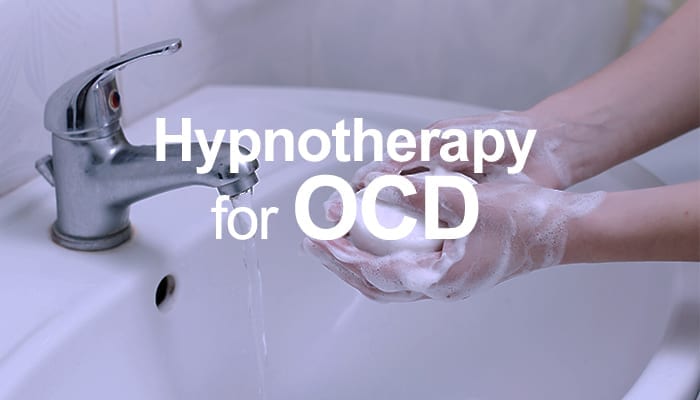
Checking and re-checking 20 times that you’ve locked the door, turned of the light-switch, or grabbed your phone and wallet? These are fairly typical traits of people who come to see us for help with OCD in Stroud (Nailsworth) or Bristol.
You don’t need to have a diagnosed disorder for tendencies like these to show up in your life. In fact, these examples are just signs that you are not as relaxed and on top of things as you could be.
Being obsessing is a form of heightened alertness around a situation or set of circumstances, whereby you just cannot get your mind off the thing you are obsessing about. One key feature of this is vigilance, which is great if you need to stay alert due to real and impending danger. But this is not so great for leaving the house on your average normal day.
Obsessive
Obsessional, recurrent and persistent thoughts, ideas, impulses or images that are experienced as unwanted, intrusive and inappropriate. The sufferer recognizes that they are a product of his or her own mind, yet tries to resist them without success. Obsessive thoughts are not just worries surrounding real life problems. These thoughts can seem senseless. They can also be violent or obscene. They usually cause a degree of distress, anxiety / fear, doubt and/ or guilt.
We help with this by re-training the focus onto other things, which the client experiences as positive, non-complicated, and non-threatening.
Compulsive
Compulsive behaviours, rituals or mental acts that are repeated again and again in response to an obsession, usually with strict and excessive rules attached. These compulsions are not inherently enjoyable, and the sufferer often views them as preventing some objectively unlikely event. They also do not support the completion of inherently useful tasks, and are not realistically connected with what they are designed to neutralize, prevent or achieve.
This is helped by a series of supportive tools that help the client relax and realize when the compulsion is happening, and that they do not need to act on it. The more you do this, the more confident you feel.
Disorder
In the therapeutic context, unless the client themselves perceives a thought, idea, act or behavior as an issue, then this is not treated as a disorder.
The bottom line is, that if it;’s a problem to you, then it’s a problem. If not, then not.
We only work towards achieving what is positive for the client, so this means that you decide the direction we are working towards, and there is nothing decided for you.
Come along for an initial consultation to find out more.
Become more relaxed & let your mind drift towards what things you enjoy
Get StartedWhat types of OCD can Hypnotherapy help with?
- Contamination obsessions
- Harm obsessions
- Symmetry & counting obsessions
- Infatuation
- Hoarding
- Obsessions
What are the factor that cause OCD?
- Genetics
- Parenting
- Personality
- Neurology
- Anxiety
- Fear
- Stress
Get more information about OCD:
Liane Ulbricht-Kazan
DHP HPD SFH Sup(Hyp) MNCH(Reg) CNHC

Sam Little
DSFH, CNHC, BA(hons)

Get Started Today
with hypnotherapy and coaching sessions provided by Liane & Sam at the Family Hypnotherapy & Coaching Practice.


